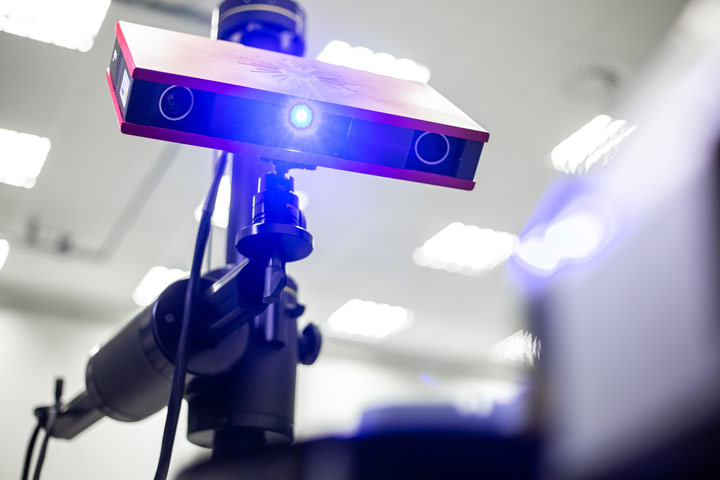
The 3D Sensor Market is witnessing rapid growth as industries increasingly adopt advanced sensing technologies for enhanced precision, automation, and efficiency. The 3D Sensor Market is projected to grow from USD 3.1 Billion in 2025 to USD 14.7 Billion by 2035, registering a compound annual growth rate (CAGR) of 20.4% during the forecast period 2025–2035. This surge in growth is driven by rising demand across automotive, consumer electronics, healthcare, industrial automation, robotics, and aerospace sectors. 3D sensors utilize technologies such as time-of-flight (ToF), structured light, LiDAR, and stereo vision to capture spatial and depth information, enabling real-time analysis and improved decision-making. Companies are increasingly integrating 3D sensors into automation systems, robotics, and augmented reality (AR)/virtual reality (VR) applications to enhance accuracy and efficiency while reducing operational costs.
In addition, the growing adoption of smart devices, autonomous vehicles, and industrial automation solutions is boosting the deployment of 3D sensing technologies. The increasing need for accurate object detection, gesture recognition, and environmental mapping across industries is further accelerating market growth. As a result, the 3D Sensor Market is expected to expand significantly, driven by innovation in sensing technologies and the integration of 3D sensors with IoT and AI-enabled platforms.
Get An Exclusive Sample of the Research Report at: https://www.marketresearchfuture.com/sample_request/1104
Market Segmentations
The 3D Sensor Market is segmented based on type, technology, application, end-user industry, and region. By type, the market is categorized into optical sensors, ultrasonic sensors, LiDAR sensors, and capacitive sensors. In terms of technology, 3D sensors include time-of-flight (ToF), structured light, stereo vision, and laser triangulation. By application, 3D sensors are deployed in robotics, industrial automation, consumer electronics, automotive, AR/VR, and healthcare equipment. End-user industries include automotive, consumer electronics, industrial, aerospace & defense, healthcare, and smart retail.
The automotive sector dominates the market due to the increasing adoption of advanced driver-assistance systems (ADAS) and autonomous vehicles, which rely heavily on accurate 3D sensing for navigation, collision avoidance, and environment mapping. Industrial automation and robotics applications are also expanding rapidly, leveraging 3D sensors for object recognition, quality inspection, and precise machine guidance. These segmentations underscore the broad applicability of 3D sensors, driving global market growth.
Market Drivers
Several factors are propelling the growth of the 3D Sensor Market. The rising adoption of autonomous vehicles and ADAS technologies is a key driver, as these systems require high-precision depth sensing for safe navigation. Increasing implementation of industrial automation and robotics solutions is another significant factor, with manufacturers deploying 3D sensors to enhance operational efficiency, quality control, and safety.
Moreover, the growth of AR/VR and gesture recognition applications in consumer electronics, gaming, and healthcare is further boosting market demand. Advancements in LiDAR, structured light, and ToF technologies are enabling more compact, cost-effective, and energy-efficient 3D sensors, making them accessible for a wider range of applications. Additionally, the growing emphasis on smart manufacturing, AI-driven analytics, and IoT integration is encouraging industries to adopt 3D sensing solutions for real-time monitoring and predictive decision-making.
Buy this Premium Research Report at: https://www.marketresearchfuture.com/checkout?currency=one_user-USD&report_id=1104
Market Opportunities
The 3D Sensor Market offers numerous opportunities for growth as technology evolves. One of the most promising areas is autonomous mobility, where 3D sensors play a critical role in mapping, navigation, and object detection. Another key opportunity is healthcare, where 3D sensors are increasingly used in imaging, diagnostics, and robotic-assisted surgeries to improve precision and outcomes.
Industrial applications, particularly in smart factories and automated warehouses, are driving demand for advanced 3D vision systems to enhance productivity and reduce errors. The emergence of miniaturized sensors and the integration of AI and edge computing further expand market potential by enabling real-time analytics and faster decision-making. Additionally, growth in consumer electronics, including smartphones and AR/VR devices, presents significant opportunities for 3D sensor vendors.
Key Players and Competitive Insights
The 3D Sensor Market is highly competitive, with several global technology companies and specialized sensor manufacturers driving innovation. Key players include Sony Corporation, STMicroelectronics, Infineon Technologies AG, Lumentum Holdings Inc., Leuze Electronic GmbH & Co. KG, Hesai Technology, Velodyne Lidar Inc., and Texas Instruments Inc. These companies are focused on developing high-precision, cost-effective 3D sensors and expanding their market presence through strategic partnerships, acquisitions, and technological advancements.
Competitive strategies involve expanding product portfolios, enhancing sensing accuracy, and integrating AI and IoT capabilities into 3D sensor solutions. Collaborations between sensor manufacturers and automotive, robotics, and consumer electronics companies are increasing, enabling seamless integration of 3D sensors into devices, machines, and autonomous systems. The dynamic competitive landscape continues to drive innovation and improve the reliability of 3D sensing technologies.
Industry Developments
Recent industry developments in the 3D Sensor Market highlight innovation and technological progress. Companies are introducing miniaturized 3D sensors for smartphones, wearables, and IoT devices. LiDAR-based sensing systems for autonomous vehicles and drones are becoming more compact and affordable. Industrial automation companies are integrating 3D vision systems into robotic arms and inspection machines for precision handling and quality assurance.
Advancements in structured light and ToF sensors are enhancing depth sensing and gesture recognition capabilities, while edge computing enables faster real-time processing of 3D data. Strategic collaborations between sensor manufacturers and technology providers are accelerating the development of integrated 3D sensing solutions for smart factories, autonomous mobility, and healthcare applications.
Regional Insights
The 3D Sensor Market is growing across North America, Europe, Asia-Pacific, Latin America, and the Middle East & Africa. North America dominates due to strong R&D investments, the presence of leading sensor manufacturers, and the adoption of autonomous vehicle technologies. Europe follows closely, driven by automotive innovation, robotics, and smart manufacturing initiatives in countries such as Germany, France, and the UK.
Asia-Pacific is expected to witness the fastest growth, fueled by industrial automation, robotics adoption, and expanding consumer electronics markets in China, Japan, South Korea, and India. Emerging markets in Latin America and the Middle East & Africa are also increasingly deploying 3D sensors across industrial, automotive, and healthcare applications to improve efficiency and competitiveness.
Browse In-depth Market Research Report: https://www.marketresearchfuture.com/reports/3d-sensor-market-1104
Future Outlook
The future outlook for the 3D Sensor Market is highly promising, driven by rapid advancements in sensing technologies and the integration of AI, IoT, and edge computing. As autonomous mobility, industrial automation, and smart devices continue to evolve, 3D sensors are expected to become essential components across industries.
Integration with AR/VR, robotics, and AI-enabled analytics will enhance predictive capabilities and operational efficiency. The growing focus on precision, automation, and sustainability will further encourage adoption of 3D sensors, enabling cost savings, energy efficiency, and improved performance. As industries increasingly embrace digital transformation, the 3D Sensor Market is poised for significant expansion, presenting substantial opportunities for sensor manufacturers, technology providers, and system integrators worldwide.
Explore Our Latest Trending Reports!
About Market Research Future:
At Market Research Future (MRFR), we enable our customers to unravel the complexity of various industries through our Cooked Research Report (CRR), Half-Cooked Research Reports (HCRR), Raw Research Reports (3R), Continuous-Feed Research (CFR), and Market Research & Consulting Services.
MRFR team have supreme objective to provide the optimum quality market research and intelligence services to our clients. Our market research studies by products, services, technologies, applications, end users, and market players for global, regional, and country level market segments, enable our clients to see more, know more, and do more, which help to answer all their most important questions.
Also, we are launching “Wantstats” the premier statistics portal for market data in comprehensive charts and stats format, providing forecasts, regional and segment analysis. Stay informed and make data-driven decisions with Wantstats.
Contact Us:
Market Research Future (Part of Wantstats Research and Media Private Limited)
99 Hudson Street, 5Th Floor
New York, NY 10013
United States of America
+1 628 258 0071 (US)
+44 2035 002 764 (UK)
Email: sales@marketresearchfuture.com
Website: https://www.marketresearchfuture.com